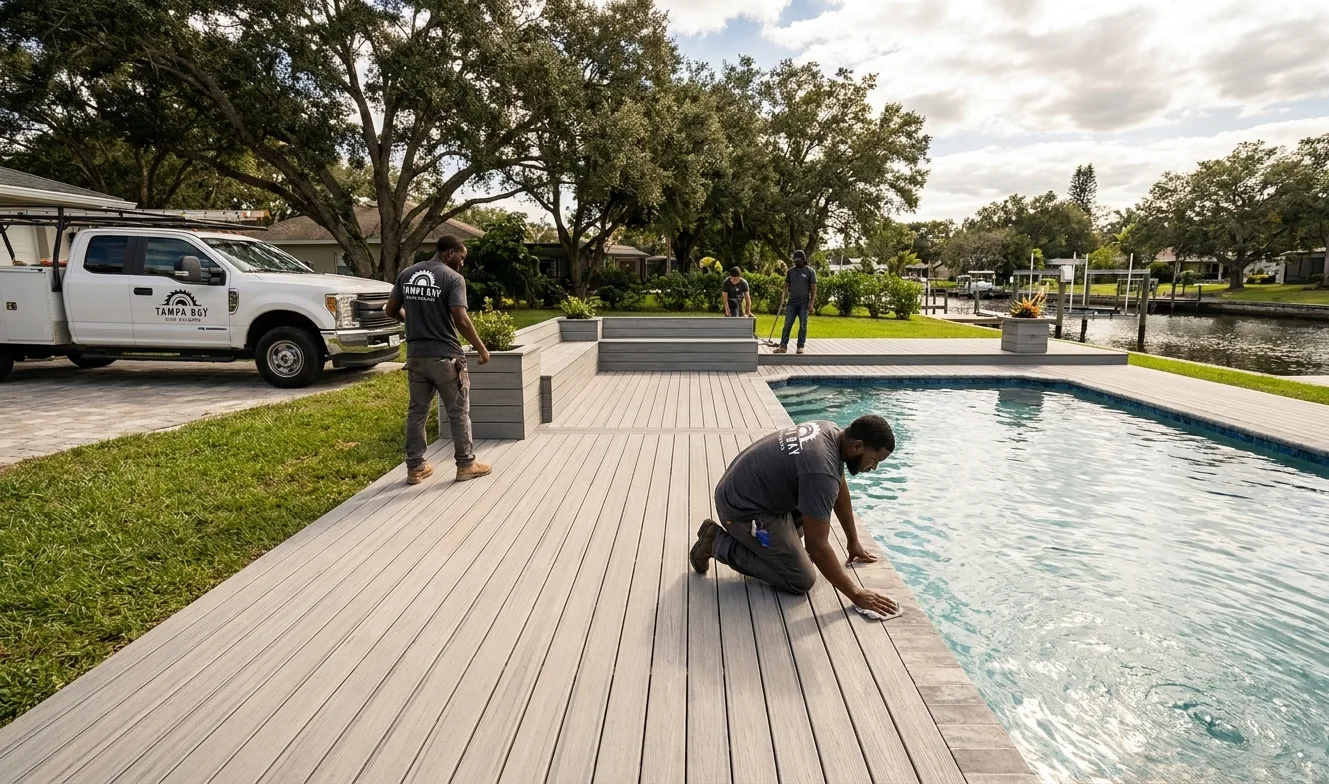
Pool Deck Material Comparison
| Material | Slip Resistance | Heat Underfoot | Maintenance |
|---|---|---|---|
| Slip-resistant composite | Excellent (textured cap) | Cool-touch lines available | Low – occasional wash |
| Textured concrete pavers | Excellent | Moderate, lighter colors cooler | Low, easy spot-repair |
| Stamped/broom-finish concrete | Good | Can get hot in direct sun | Low, periodic resealing |
| Traditional wood | Poor when wet | Moderate | High, not generally recommended |
Slip Resistance Comes First
Around a pool, slip resistance isn't a nice-to-have — it's the single most important safety factor, especially with kids running around wet surfaces. Textured, slip-rated composite decking and textured concrete pavers both perform well here, using surface grain or aggregate texture to maintain grip even when soaked. Smooth, polished, or glossy-finish surfaces of any material should be avoided immediately around a pool's edge.
Cool-Touch Composite vs. Pavers vs. Wood
Modern cool-touch composite lines are engineered specifically for pool deck use, using lighter color pigments and heat-reflective technology to stay more comfortable underfoot than standard composite or dark pavers in direct summer sun. Pavers offer a different advantage: if one paver cracks or stains badly, it can be popped out and replaced individually without disturbing the rest of the deck, which isn't possible with a continuous composite or concrete surface. Traditional wood decking is generally not something we recommend directly around a pool — constant splash exposure accelerates rot at a much faster rate than a typical backyard deck sees, and wet wood grain can become genuinely slippery and prone to splintering right where bare feet are most at risk.
Drainage and Code Requirements
Hillsborough and Pasco County both require pool decks to be graded so water drains away from the pool structure and the home's foundation rather than pooling on the surface. Poor drainage around a pool doesn't just create a slip hazard — standing water breeds mosquitoes fast in our climate and can undermine paver base material or composite substructure over time. We design proper slope and, where needed, integrate a perimeter drain into every pool deck we build.
Chlorine and Sunscreen Resistance
Pool decks face constant exposure to chlorinated splash-out and sunscreen residue, both of which can stain or degrade certain materials over time. Capped composite decking and sealed pavers both resist chlorine staining well. Unsealed or poorly sealed concrete and untreated wood are more prone to visible staining and residue buildup, meaning more frequent cleaning to keep the deck looking new.
PAA: Pool Deck Material Questions
What is the best decking material around a pool in Florida?
Slip-resistant capped composite and textured concrete pavers are the top two choices for Tampa Bay pool decks, balancing safety, heat performance, and low maintenance better than any other option.
Can I put a wood deck around my pool?
It's possible but not something we typically recommend for the area in direct, constant splash contact with the pool. If you love the look of wood, a composite board with a wood-grain finish gives a similar aesthetic without the rot and slip risk.
Get a Pool Deck Built for Florida Conditions
Every pool deck we build is designed around slip resistance, proper drainage, and materials rated for constant water and chlorine exposure. Request a free pool deck estimate or call (813) 536-3984 to get started.
Also see: Wood vs. Composite Decking for Florida Homes and How Much Does It Cost to Build a Deck in Florida?